
| Botanical | Hydrangea paniculata 'PeeGee' |
| Common Name | Hydrangea paniculata |
| Family | Hydrangeaceae (hydrangea Family) |
| Height | 10-15' (or as pruned) |
| Spacing | 12-15' |
| Hardiness | Zones 3-8 |
| Exposure | Full Sun to Part Shade |
| Foliage | Dark Green |
| Flower | White to Pink |
| Bloomtime | Midsummer to Fall |
Retail
Guaranteed to Grow
Hydrangea, paniculata ‘PeeGee’
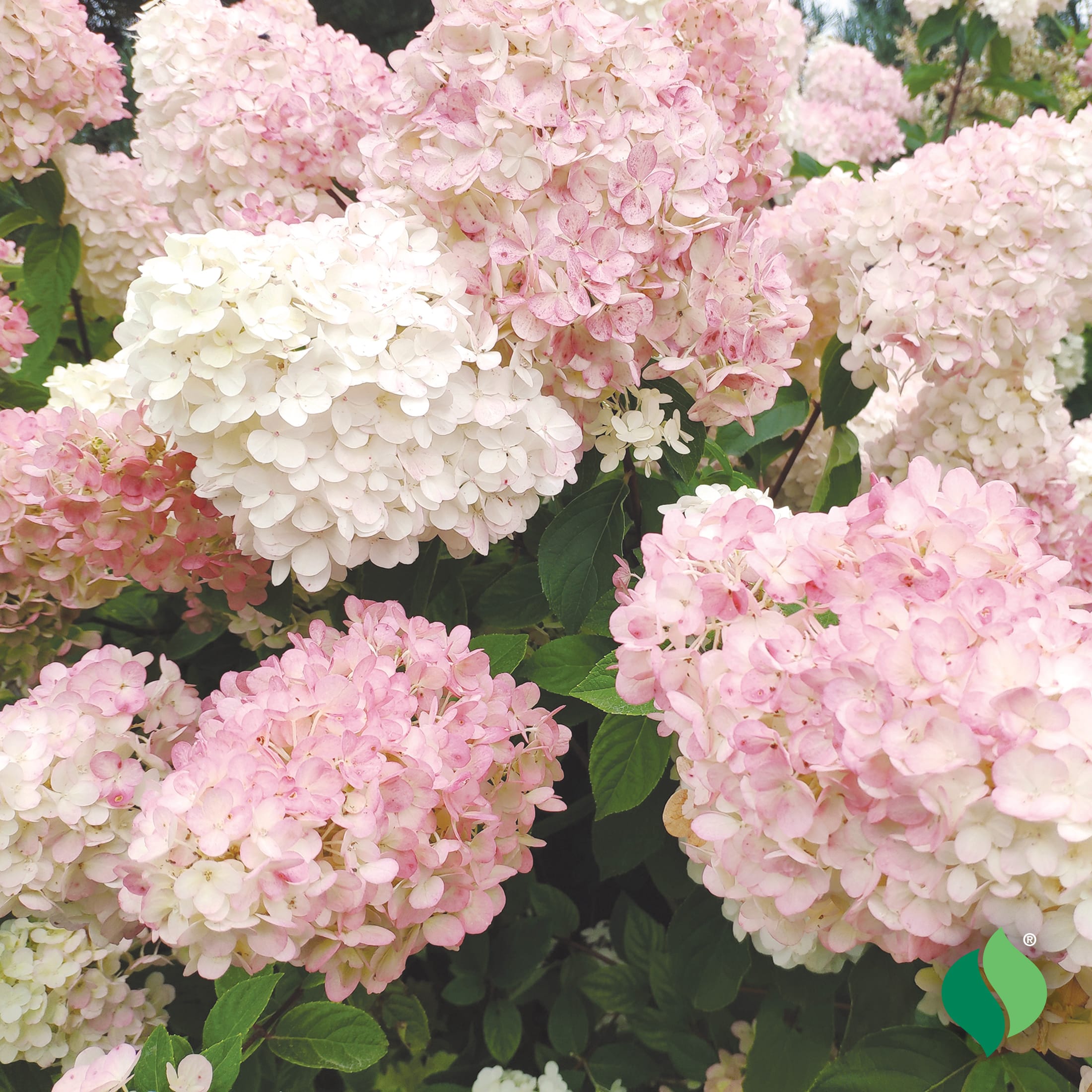
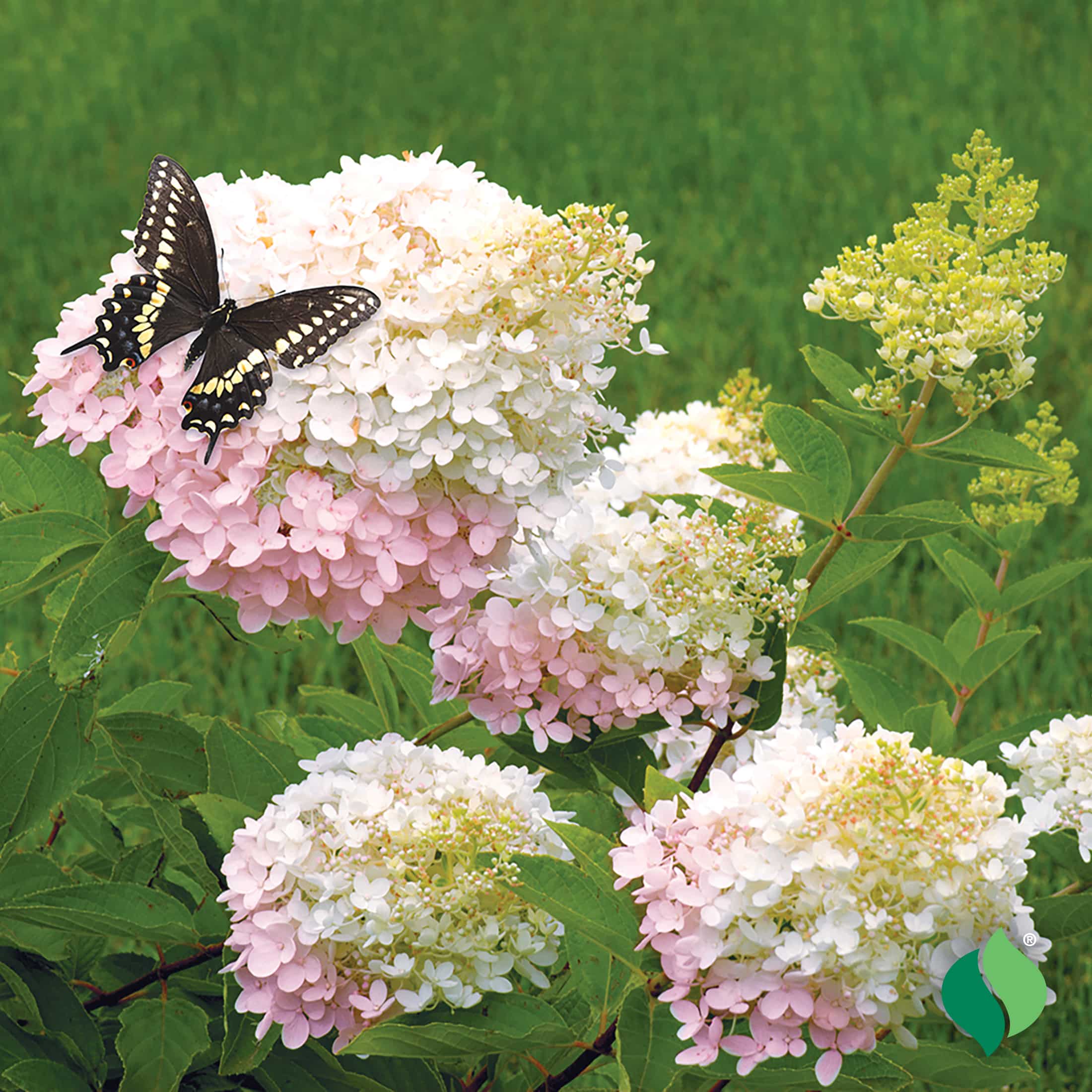
Hydrangea ‘PeeGee’ blooms over a long season, with the flowers starting white in midsummer, aging to pink, and finally turning rust brown in autumn. ‘PeeGee’ hydrangea is a fast-growing, adaptable shrub that thrives almost anywhere. It tolerates acidic to neutral soils as long as they are well-drained. You can prune ‘PeeGee’ hydrangea in late winter since it produces its flowers on new growth. To get the biggest flower clusters on your block, reduce the number of stems by cutting the previous year’s shoots back to within just a few buds of the main branches. ‘PeeGee’ hydrangea is the most cold-hardy, most adaptable, most tolerant of urban conditions, and the most commonly cultivated hydrangea in the northern U.S. Its pyramid-shaped clusters of white to pink flowers have brightened yards for 150 years.
- Cold hardy
- Attracts butterflies
- Fast growing shrub

Plant Details +
Planting/Care Instructions +
Planting Instructions: 'PeeGee's should be planted in moist, rich, well-drained soil. Dig a hole large enough to encompass the roots without bending or circling. Set the plant in place so the crown (part of the plant where the root meets the stem) is about 1-2 inches below the soil surface. When planting your 'PeeGee', the crown (where the stem meets the roots) should be placed just below ground level. Planting deeper can cause the roots to rot. Cover with soil to the original soil surface and water thoroughly. Once the shrub is placed in the hole, tamp the soil down around it and water. It is a good idea to mulch your 'PeeGee' to help the soil to retain moisture. It should also be fertilized with a light fertilizer in March, May, and July. 'PeeGee' hydrangea requires moderate watering during the growing season.
Pests or Diseases: No serious insect or disease problems. Some susceptibility to bud blight, bacterial wilt, leaf spot and mildew. Aphids are occasional visitors.